
"Close" a conversation or thread and prevent replies
Sometimes your conversations (or threads within a conversation) should be "closed" so that your guests can still see past messages but cannot send new replies. And sometimes you need to go further and remove access altogether.
This article shows you how you can:
Note: Closing a conversation does not delete it. Depending on which toggle you use, the conversation either stays fully visible to your guests (Close messages) or becomes inaccessible to them (Close conversation). If you only want to tidy up your own list, you can archive the conversation.
Where these settings live
All of the archive and close controls live in one place, and you can reach that place from two spots:
Inside the conversation — open the conversation → Settings → the Access tab → the Access sub-tab. Scroll to Archive or close access. You can also click Archive or Close… at the top right of the settings modal to jump straight there.
From any conversation menu — click the … menu on a conversation (in the conversation header, or on any row in your conversations list) → Archive or close…. This opens the Archive or close modal with the same set of toggles.
Both places control the same settings, so use whichever is faster for you.
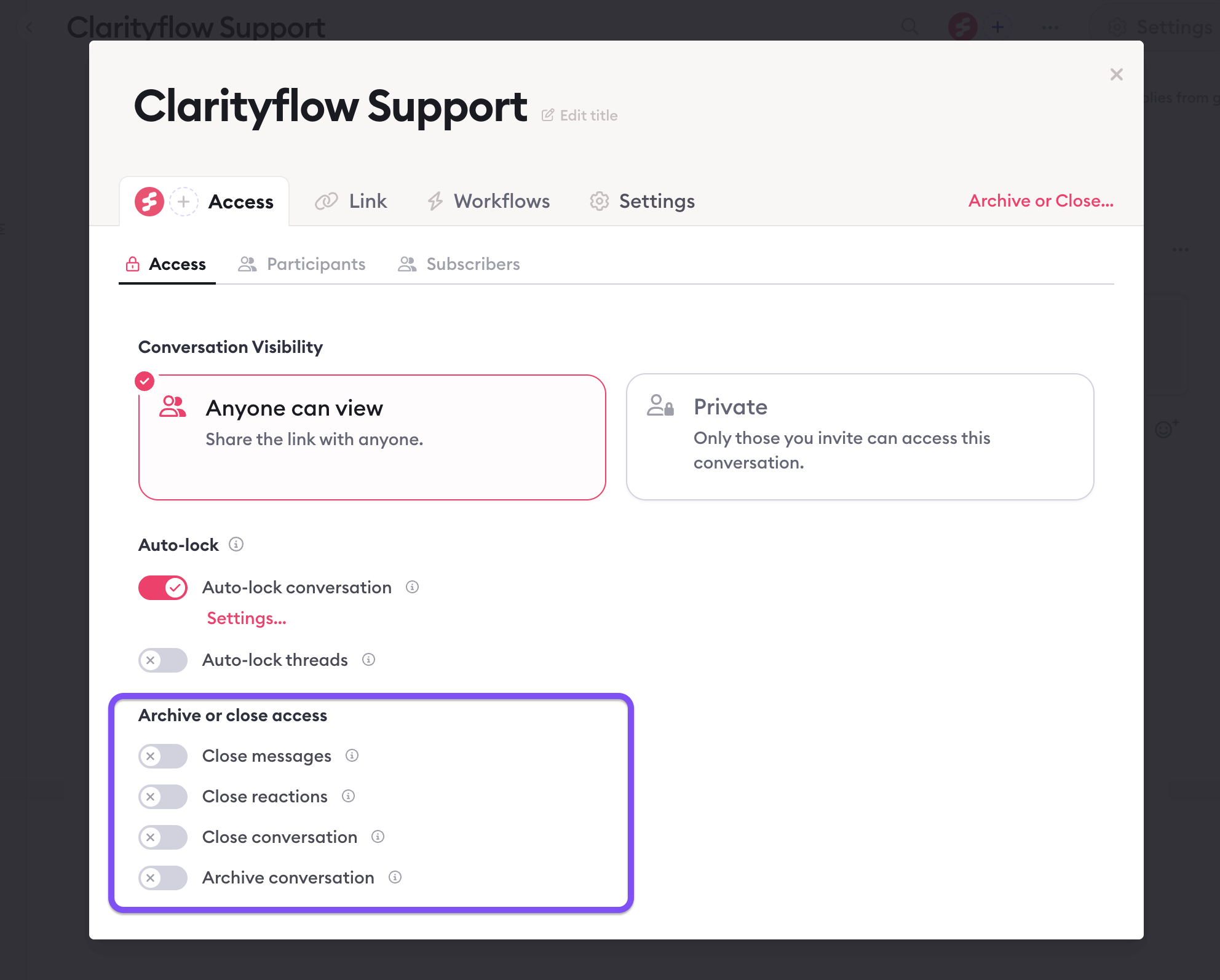
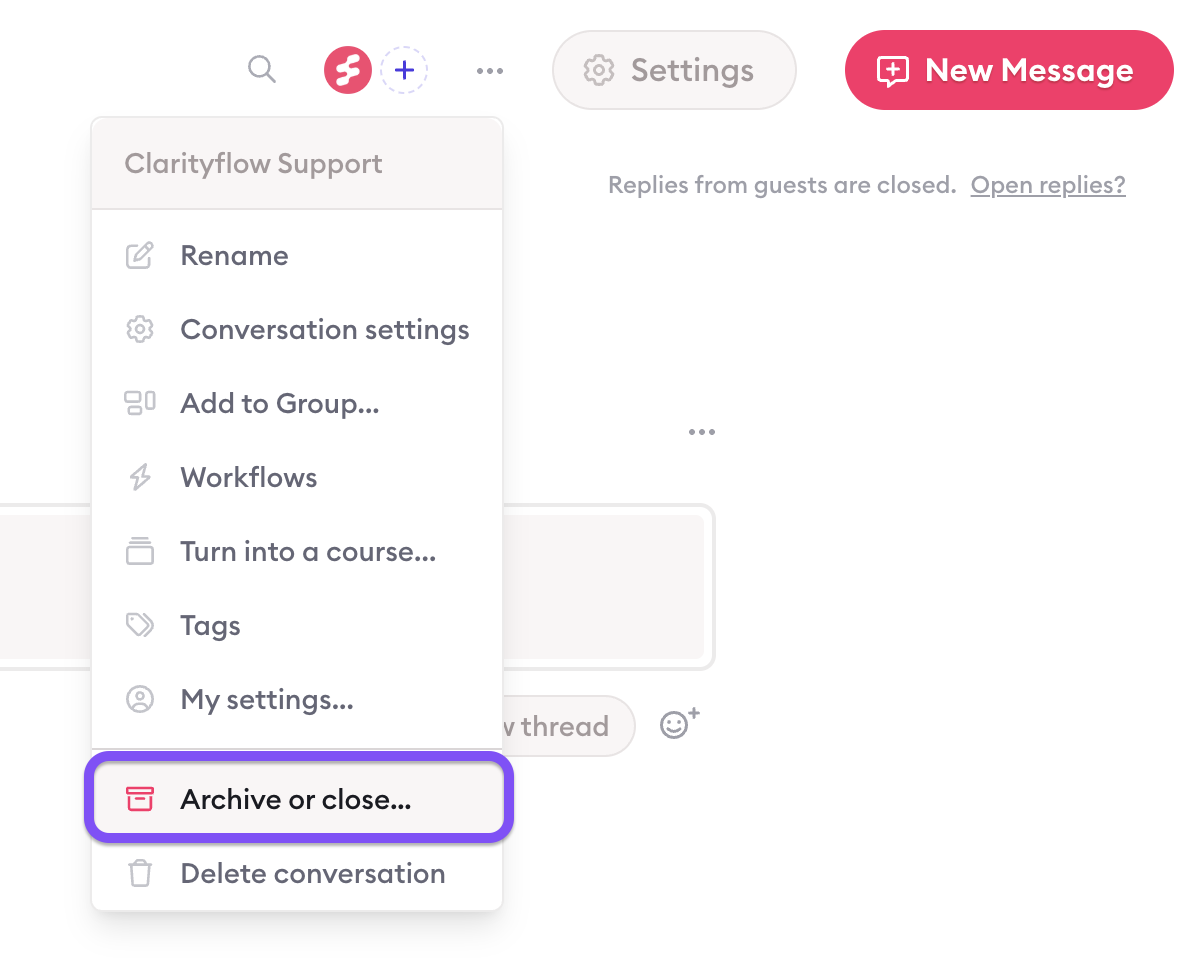
Close a conversation to new messages
Turn on Close messages.
Disables the ability for non-team members to post new messages in the conversation. Participants can still access and view past messages in this conversation.
This is the setting to use when a program has wrapped up but you want your client to keep the conversation as a record they can revisit.
When messages are closed, a Replies are closed notice appears at the top of the conversation so you know your guests can't post. Click Open replies? to reopen it in one step.

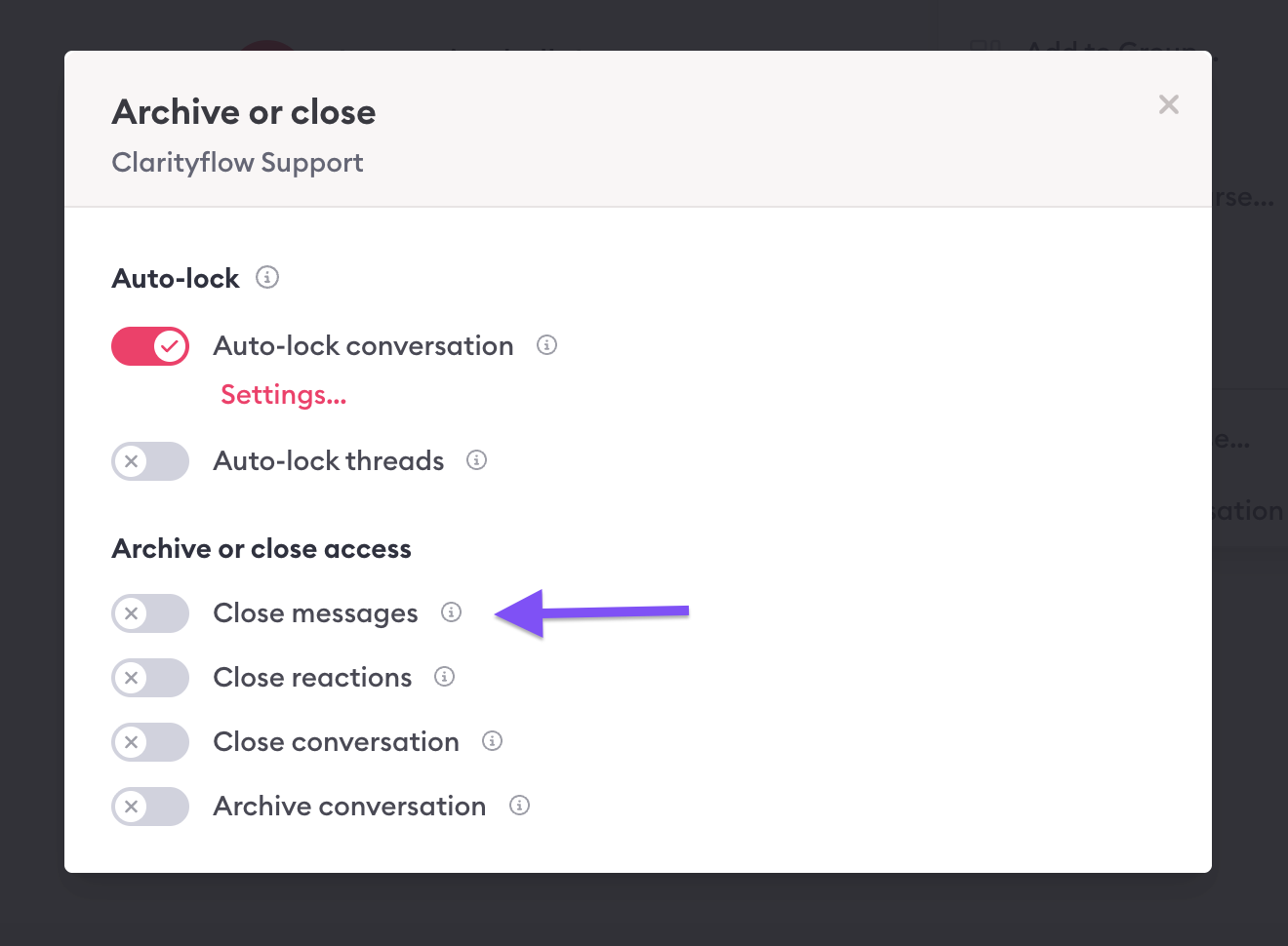
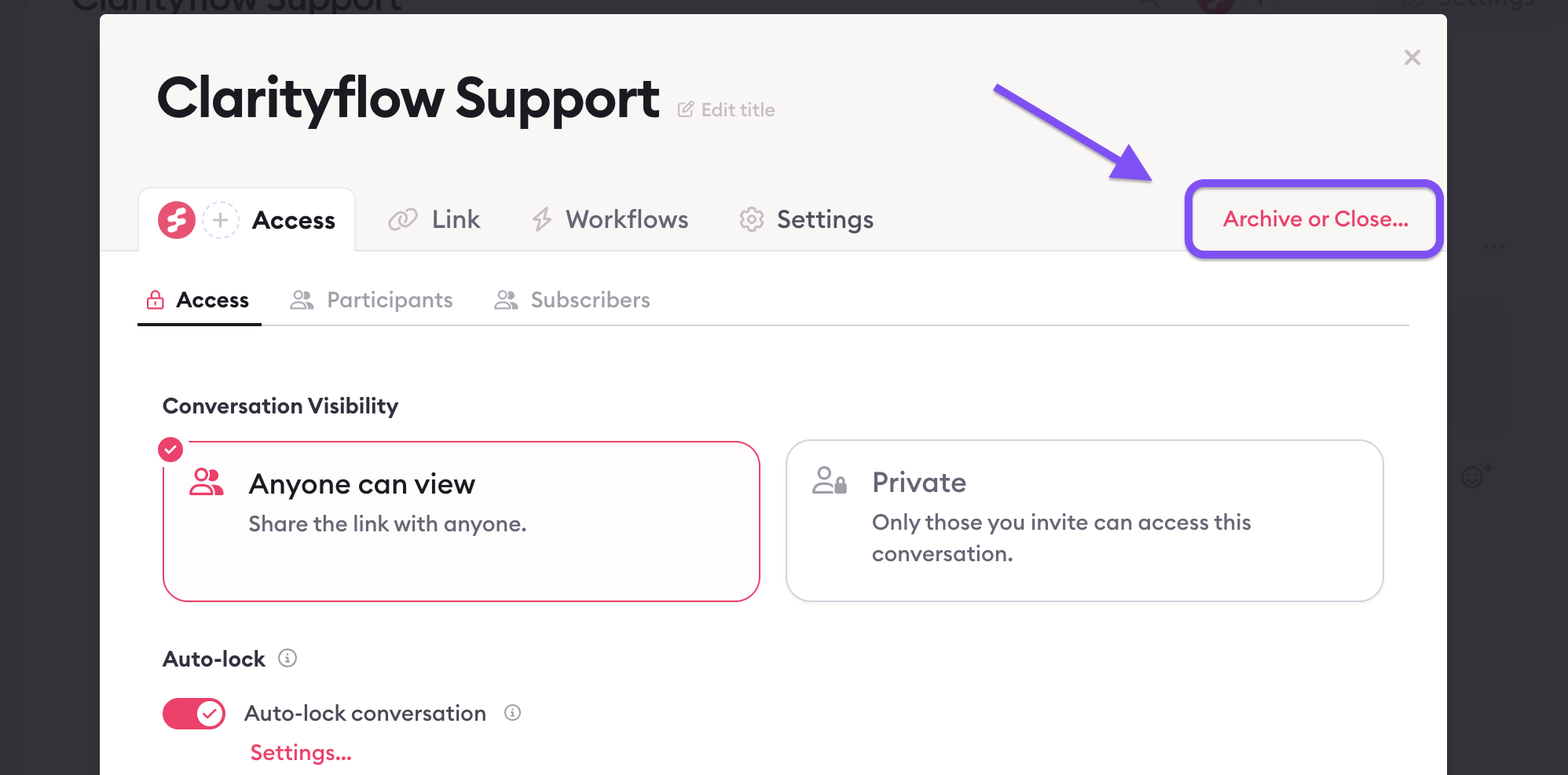
Note: When a conversation's replies are closed, you and team members in your account can still post messages. Only guests (your clients, etc.) will not have the ability to post new messages in this conversation.
Close a conversation to remove access
Turn on Close conversation.
Blocks conversation from being seen or accessed by all non-team members. Old links pointing to this conversation will redirect participants and block them from viewing or accessing this conversation.
This is stronger than Close messages. Guests are blocked from the conversation entirely, including through old links in past email notifications, embedded conversations on your website, and shared links. Only team members in the account that owns the conversation can still open it.
You'll see two visual cues once a conversation is closed:
A lock icon on the conversation in your list
Guest participants and their avatars shown at 50% opacity, so you can tell at a glance who's been locked out

Closing a conversation doesn't hide it from your own list. If you want it out of the way too, also turn on Archive conversation.
Close reactions
Turn on Close reactions.
Closes the ability for guests to leave emoji reactions on messages in this conversation.
Reactions that have already been posted stay visible — this only stops new ones.
Close replies in specific threads
Sometimes you just want to prevent replies within specific thread(s) in your conversation, while leaving the rest of the conversation open for new threads and replies.
To close a thread's replies:
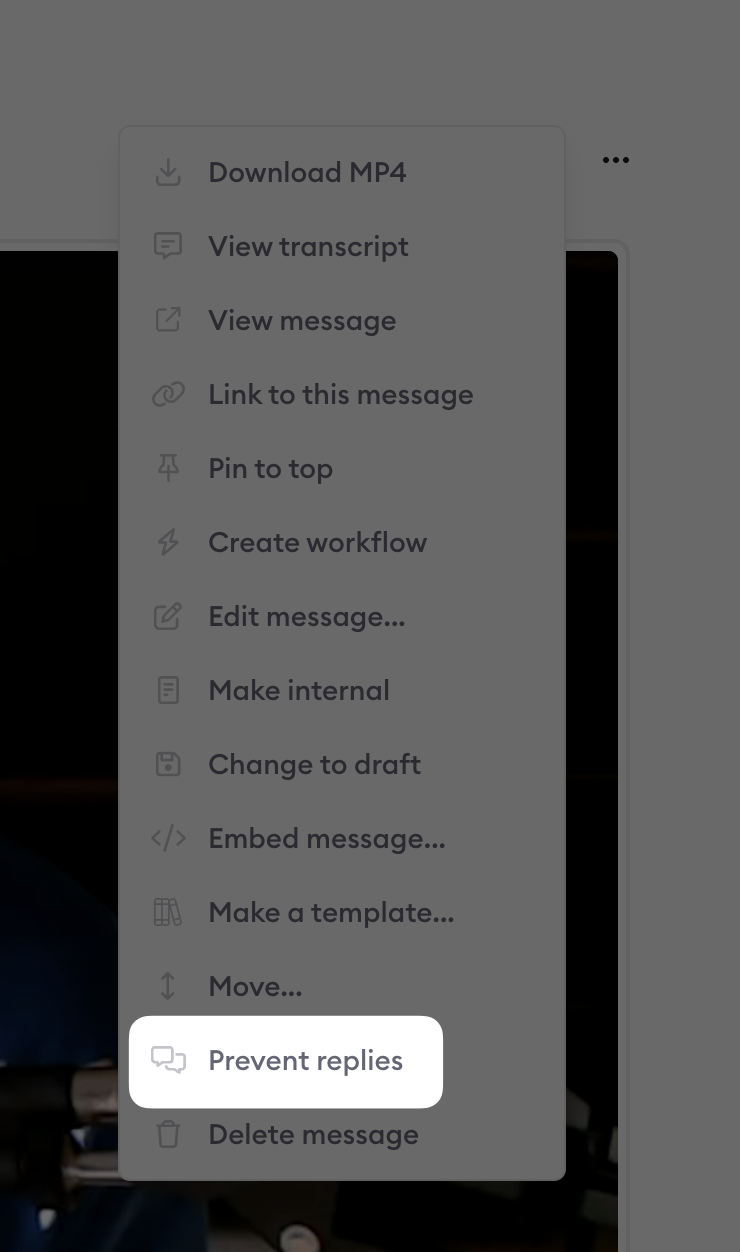
Open any message's settings dropdown and click "Prevent replies":
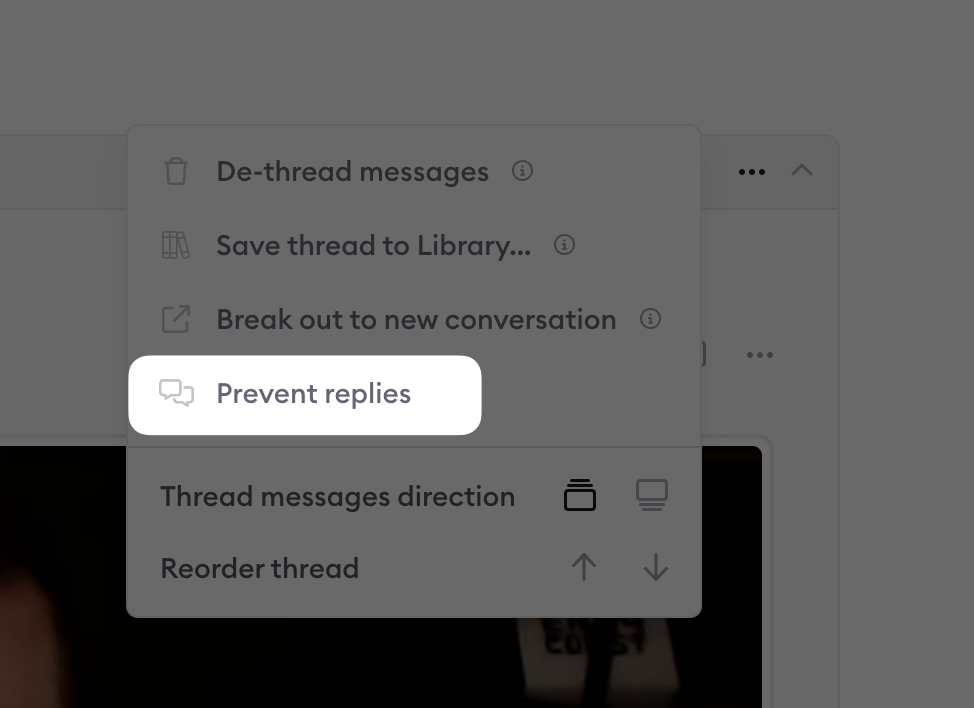
When the thread is in its opened state, you can open the thread's settings dropdown and click "Prevent replies":
When a thread is closed from accepting new replies from guests, you (as the account owner or team member) can still post replies, but you'll see this at the bottom of the thread. You can click it to reopen replies:

Prevent a specific user from replying
Using the toggle to turn a conversation's replies on or off will adjust the setting for all participants. However, you also have control over selecting only certain participants who can post replies.
Within a conversation, click your message participants near the top right corner.
This opens a list of all of your conversation participants.
Select "settings" next to the name of the participant you want to adjust and toggle the setting for "can post." When it's turned off, the participant can't post replies to the conversation.

Related guides
Archive conversations — Archiving and closing are easy to mix up. Archiving only moves a conversation out of your main list; your guests keep exactly the access they had. Use it when the conversation is finished and you just want a tidier list.
Auto-lock Conversations & Threads — If you find yourself closing conversations by hand at the end of every engagement, auto-lock can do it for you on a schedule. Set a rule once and Clarityflow closes or archives conversations and threads based on time or message count.
Understand who can access a conversation — Closing changes what your guests can do. Public vs private (on Access) changes who can get in at all.
Finding archived or closed conversations or threads — Once you've closed or archived something, it drops out of your default list view. This shows you the filters that bring it back.

Learn more about Clarityflow.